
Dave Bayley Invites Us Inside His Mind For Glass Animals’ third album, Dreamland
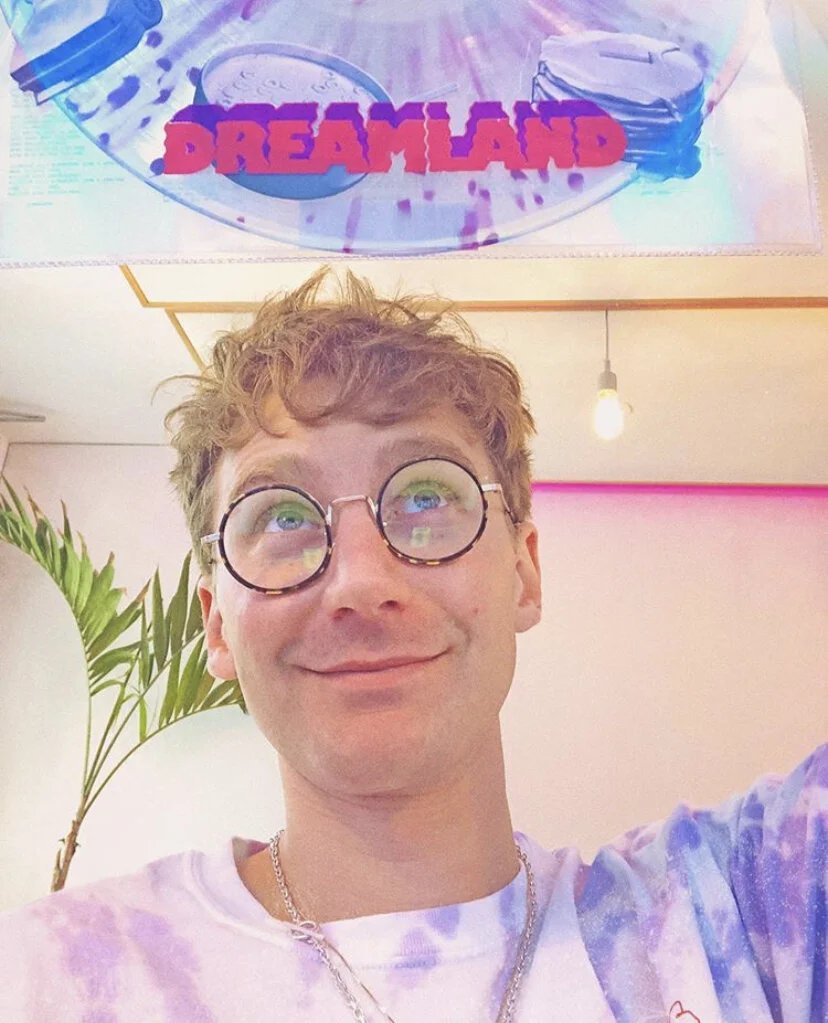
Close your eyes and listen closely. Behind the upbeat, glittering synth and effervescent vocals of Glass Animal’s third studio album, Dreamland, lies the story of how lead singer Dave Bayley confronted his inner-demons.
It was two years ago when tragedy struck the psychedelic-pop group following drummer Joe Seaward’s near fatal cycling accident. For friends, family, and bandmates Drew MacFarlane and Ed Irwin-Singer, optimism was key in seeing Seaward through his time at the hospital.
But while others rallied in their positivity, Bayley remained painfully aware of just how severe his friend’s injury was. With a background in neuroscience, the future looked dim. He wasn’t sure if performing would ever be a reality for Glass Animals again.
The experience was consuming. It opened up deep wounds of the past for Bayley, who found himself struggling to confront the pain without knowing what the future held.
In an interview with Independent Magazine, Bayley compares the experience to “peeling off band-aids”. As he peeled one off, another followed, and another, until nothing was left but raw feelings and words that could only be communicated through his sound.
It’s been 4 years since the debut of second studio album How to Be a Human Being. So what is the story that Bayley is looking to tell after this musical hiatus? What story underlies the unmistakable, shimmering beats of Glass Animal’s creation this time around?
Let’s circle back to those inner-demons. Sometimes, in the face of tragedy, past hurt or harm can resurface in ways that the human psyche isn’t able to comprehend. Sometimes, they become so big that they swallow you whole. As Bayley alluded to, healing from traumatic events can be much like peeling band-aids off, some of which you didn’t even know you had.
The near-death experience of Seaward is what inspired an album that the group wasn’t even aware they were writing at the time. While confronting their uncertainty, trauma, and the repressed feelings that had bubbled to the surface, the creation of what was to become Dreamland began to unfold.
The tracks off of the album are moments where Bayley’s overwhelming emotion is cloaked in a gauze of ethereal beats, just enough to distract from the true rigidity of the lyrics that lie underneath.
For example, in the song “Heat Waves”, a cool, experimental beat melds with smooth, trap-like drops. For a second, the meaning of the song is masked by the pleasing musical aesthetics, and as the listener, you almost forget that you’re listening to a story about a love lost.
In a recent cover feature in NME magazine, Bayley states that he wants this album to be a “full reflection of life.” This means coming to terms with those regrets of the past and understanding that being young, dumb, and in love is a beautiful human experience, no matter the outcome.
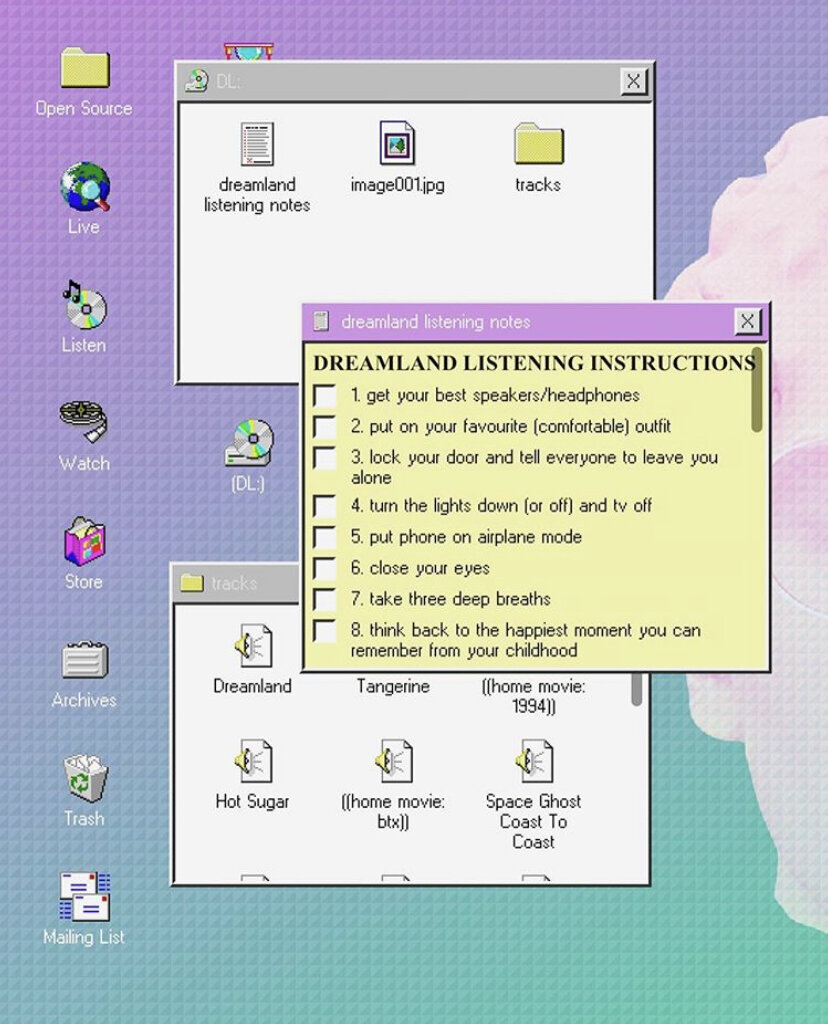
The table of contents of this storybook album can be found on title track “Dreamland”, where Bayley ushers us into the journey by introducing the series of topics touched on.
“The first friend you had, the worst thing you said,” is what the singer croons over celestial instrumentals, finishing up the verse with “all you’ve done in bed, all on Memorex, all round your head…”
In other tracks such as “It’s All So Incredibly Loud”, and “Your Love”, the topic of past relationships is explored even further. This is a recurring theme found throughout the album and it’s safe to assume that a big chunk of Bayley’s heart had been held hostage by these thoughts for a while.
Like any good story, there is a character arc for our protagonist. “Tokyo Drifting” ft. Denzel Curry is a trap track where Bayley’s alter ego (his aforementioned “Sasha Fierce”, as stated in NME) rears his head just in time for a comeback.
Here is where we meet ‘Wavey Davey’, the new and improved Bayley who is more than ready to be back on stage. Through the adversity rises a confident, fresh Glass Animals with more potential than ever. This song in particular is important because unlike many of the other tracks, the positive energy of the lyrics matches the playful beat.
Pay attention to the intentional antithesis in Bayley’s lyrics in comparison to the fun, psychedelic beats that Glass Animals are known for. This is the key to understanding the psychology behind Dave Bayley’s music.
There is beauty found within the struggle. The album is the audibly tangible embodiment of this idea. While we as listeners are told tales of lost love, of nostalgia, and of deeply rooted pain, we’re still able to bop our heads and find excitement in the sound.
Through those glittering rifts and mellow vibes, you may find yourself connecting to the music not just for it’s sound, but for the story it tells, too.
While he never actually became a neuroscientist, Dave Bayley knows how to get in our heads, and Dreamland is no exception.
Written by Jordan McGrew, Edited by Emma Barsky